
EDI Ultrapure Water Systems
Electrodeionization modules for continuous ultrapure water polishing
Overview
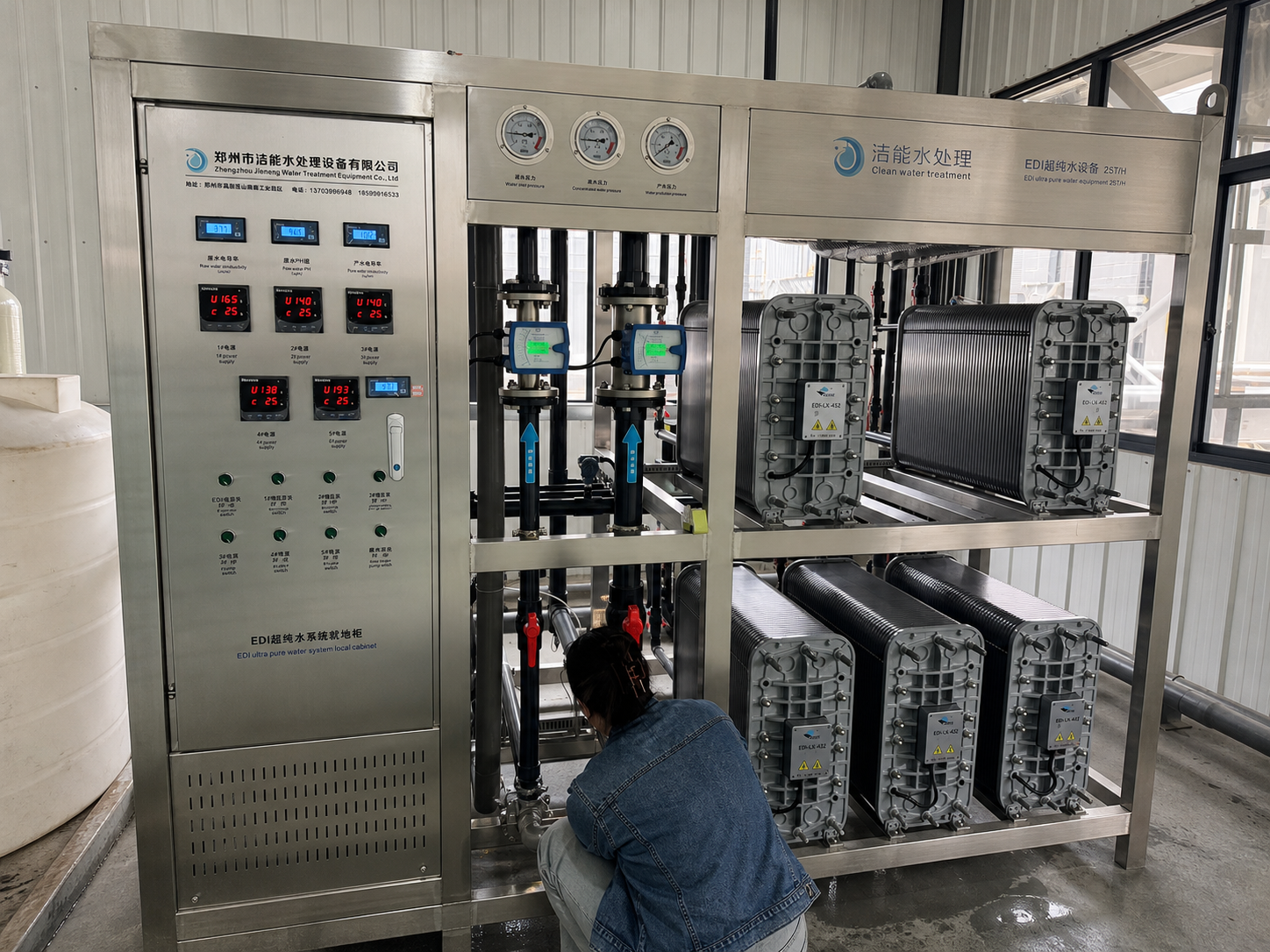
JIE NENG's EDI systems are built around stacked electrodeionization modules mounted on a stainless steel frame, fed by RO permeate, and monitored through a local control cabinet that displays inlet conductivity, inlet pH and product resistivity.
Because EDI operates continuously using an applied electric field rather than chemical regeneration, it is positioned as the final polishing stage after RO in ultrapure water trains for electronics, pharmaceutical and laboratory-grade water applications.
The control cabinet integrates power supplies for each EDI module bank along with local switches for inlet valve, booster pump and module power, allowing operators to monitor and control the polishing stage from a single panel.
Key Features
- Continuous electrodeionization without acid/caustic regeneration
- Stainless steel frame with stacked EDI module banks
- Local control cabinet with conductivity, pH and resistivity displays
- Individual power supply and switch per module bank
- Designed to follow RO permeate as final polishing stage
Typical Applications
- Ultrapure water for electronics manufacturing
- Pharmaceutical and laboratory water
- Boiler feedwater final polishing
- Power plant makeup water treatment
Related Equipment
 Membrane Separation
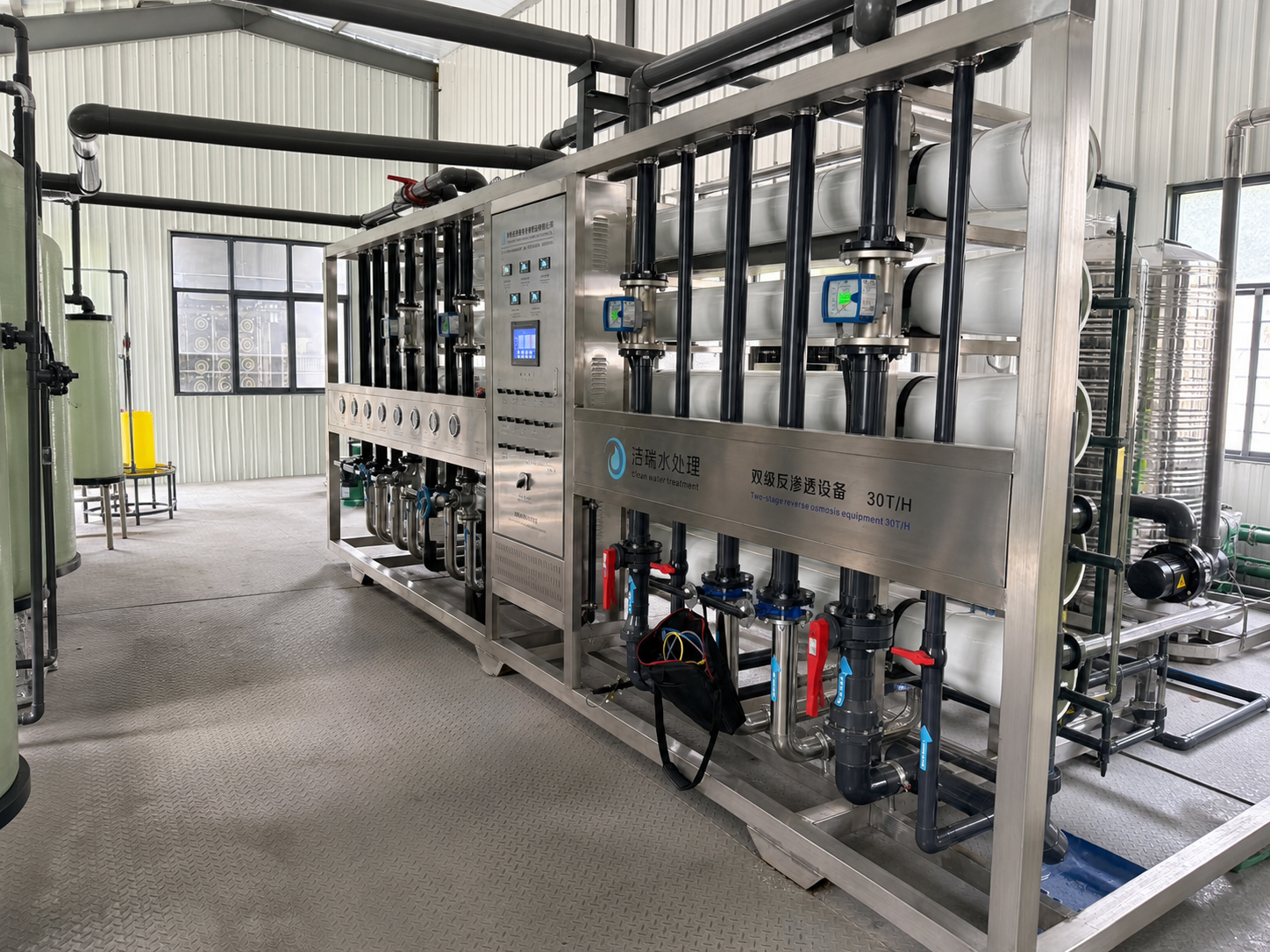
Reverse Osmosis (RO) Systems
Single- and two-stage RO skids for desalination and deep purification
View specifications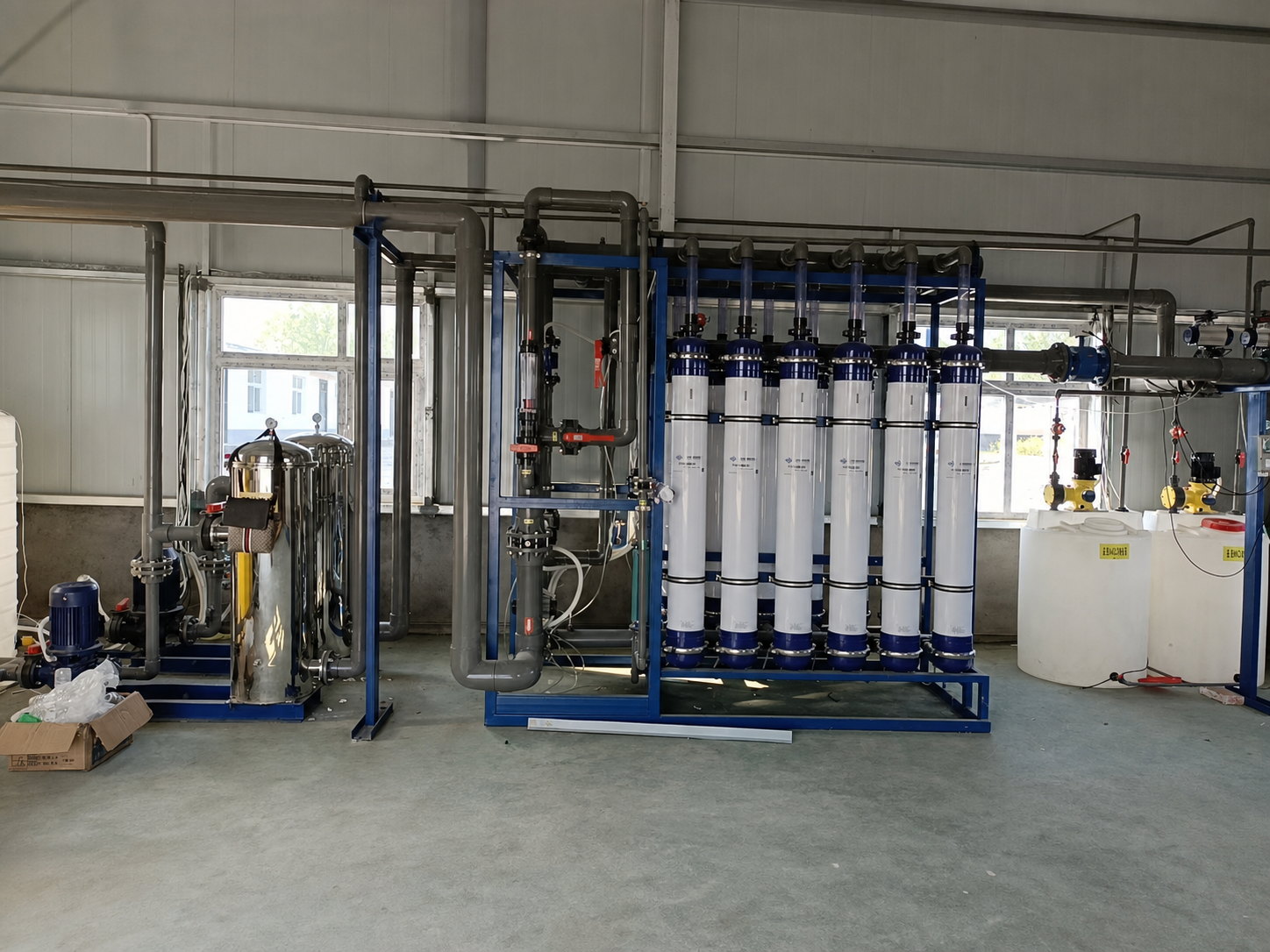 Membrane Separation
Ultrafiltration (UF) Membrane Systems
Hollow-fiber ultrafiltration trains for suspended solids and pathogen reduction
View specifications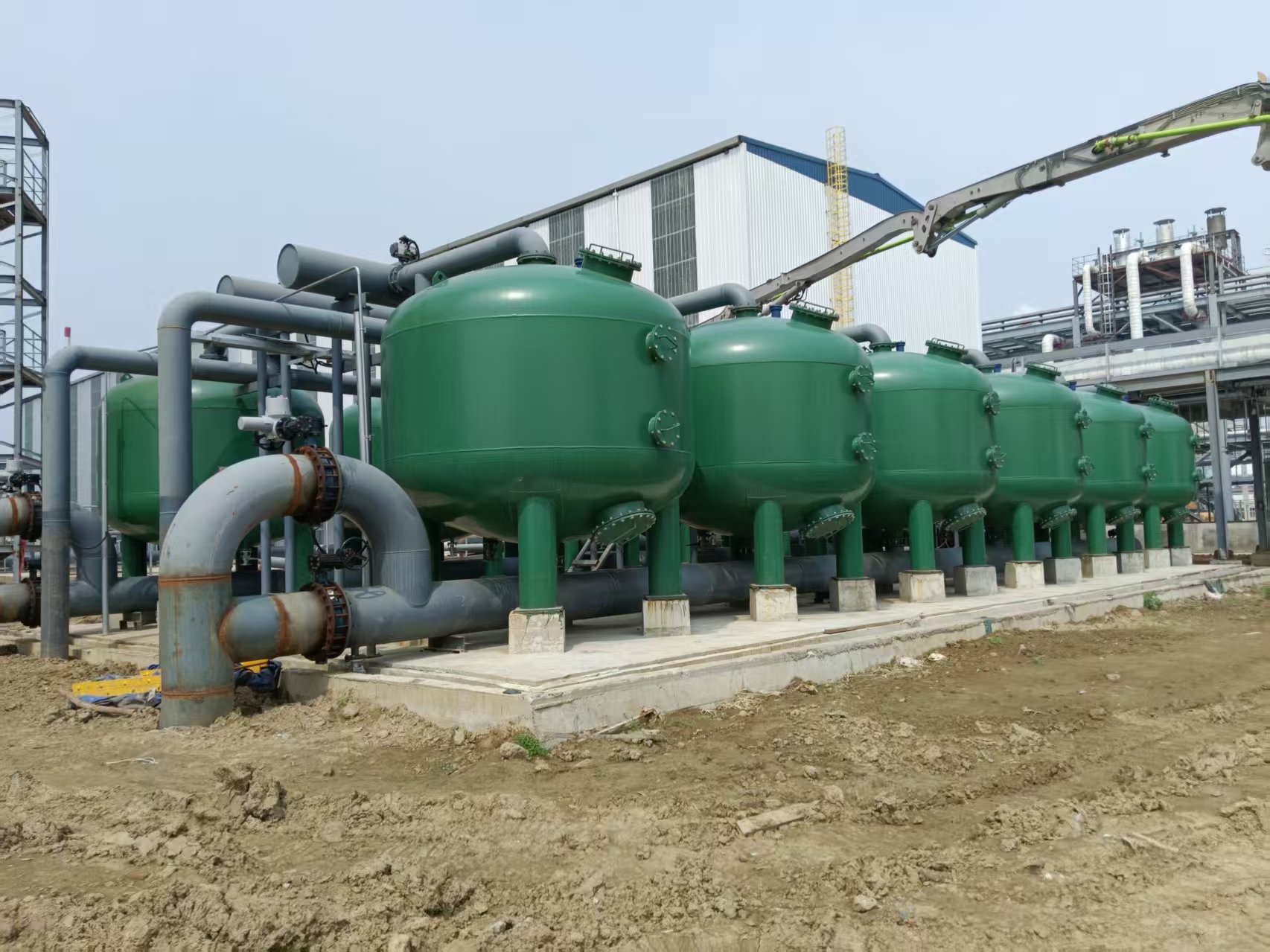 Pretreatment
Shallow Sand Filters
FRP pressure vessels for turbidity, sediment and organic pretreatment
View specificationsDiscuss your project with our engineering team
Share your feedwater analysis, required throughput and application, and we will follow up with a configuration tailored to your project.